Finding a code violation notice taped to your door or in the mail is stressful — but it's also a solvable problem if you move quickly. In Florida, code enforcement exists to bring properties back into compliance, not to punish you, and most cases end quietly once the issue is fixed.
The worst thing you can do is nothing. Violations that are ignored snowball into daily fines and liens. Here's how to handle the notice step by step. If the deadline is tight or the violation is complex, [we can step in and manage the whole resolution](/contact).
First, read the notice carefully
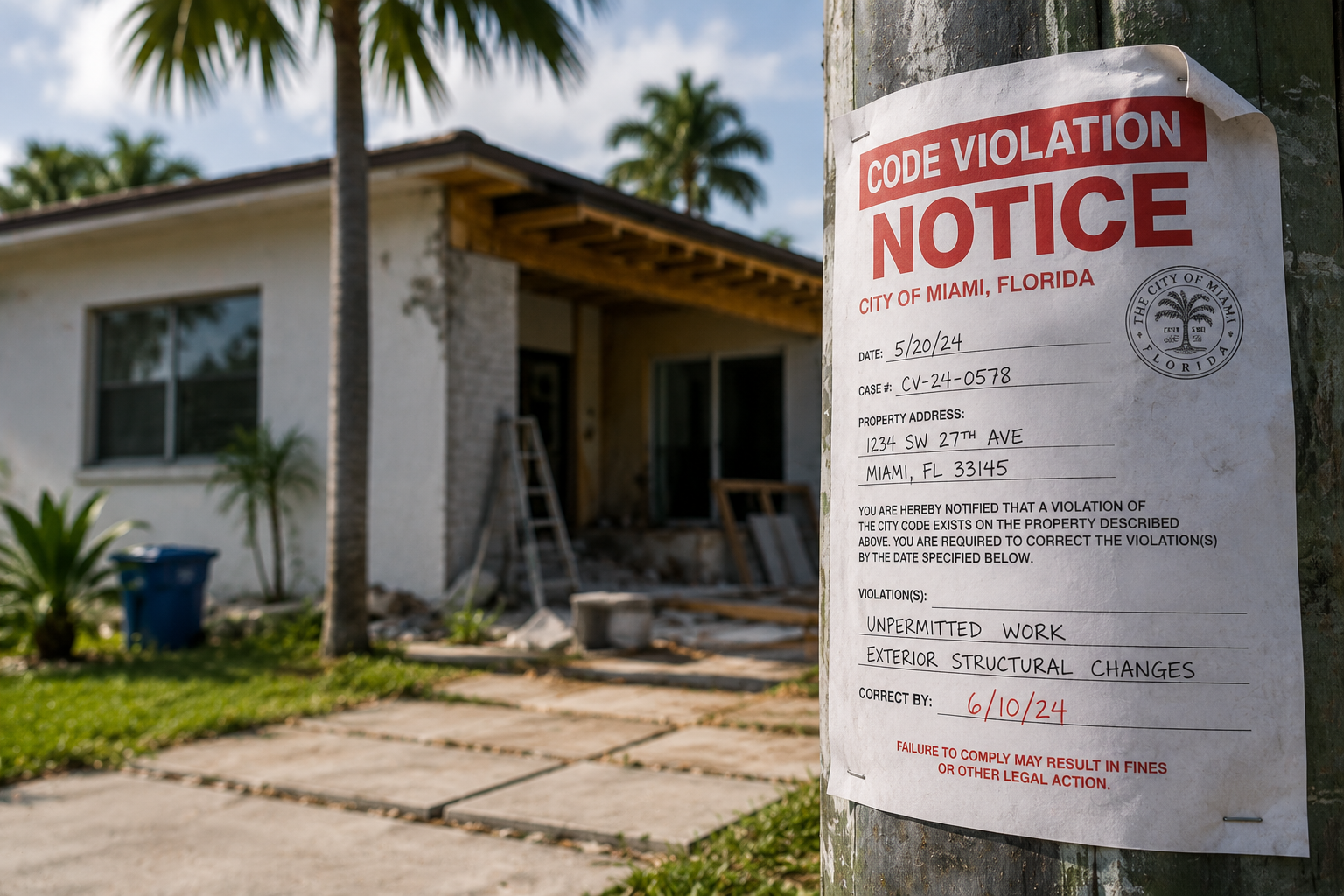
Every notice contains the same key pieces of information. Find them before you do anything else — they tell you exactly what the county or city expects and how long you have.
- The specific violation and the code section it references.
- The deadline to correct it (the compliance date).
- The name and contact info of the assigned code inspector.
- What happens if you don't comply — usually fines, then a hearing.
Understand what kind of violation it is
Not all violations are the same, and the fix depends on the type. Building violations (unpermitted construction, expired permits, unsafe structures) usually require pulling or closing a permit. Property maintenance or nuisance violations (overgrowth, junk, unpermitted use) may just require cleanup or a change in how the property is used.

Contact the inspector — don't hide
Calling the assigned inspector is one of the most effective things you can do. Inspectors generally want compliance, not fines. A quick call to confirm what they're looking for, and to show you're actively working on it, often results in more time and a smoother path. Get any extension or clarification in writing when you can.
Correct the violation the right way
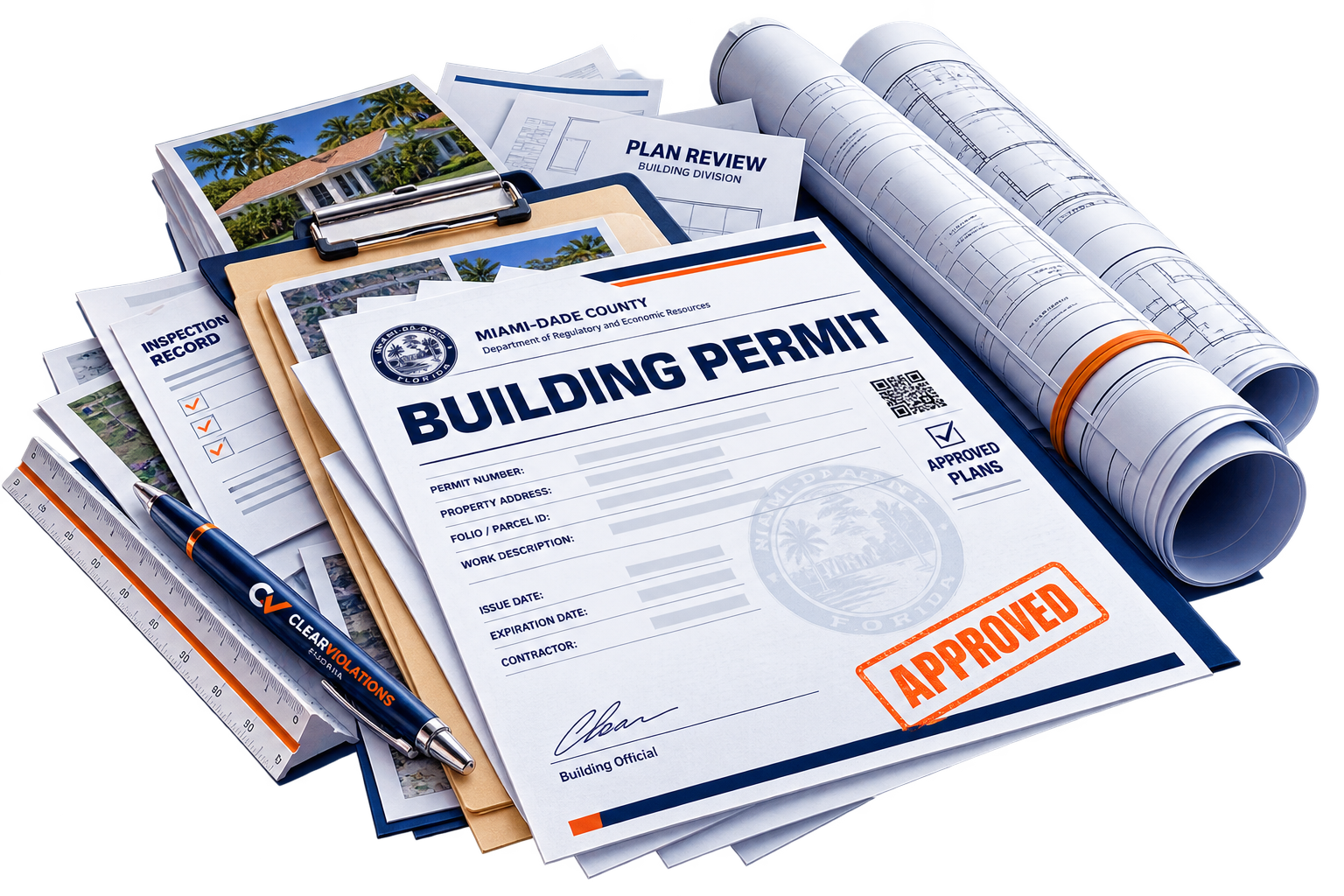
This is the heart of it. If the violation is unpermitted work, you'll typically need to apply for an after-the-fact permit, get the work inspected, and bring it up to current code. Cutting corners here just creates a second violation, so it's worth doing properly the first time.
Request a re-inspection and get it in writing
Once you've corrected the issue, request a compliance re-inspection. When the inspector confirms the property is compliant, ask for written confirmation that the case is closed. That record protects you if the violation ever resurfaces during a sale or title search.
Conclusion
A code violation notice is a deadline, not a dead end. Read it, engage the inspector, fix the underlying issue properly, and get written confirmation that you're compliant. Handle it early and it stays small; ignore it and it becomes fines and liens. If you'd rather not navigate code enforcement alone, [reach out and we'll take it from here](/contact).