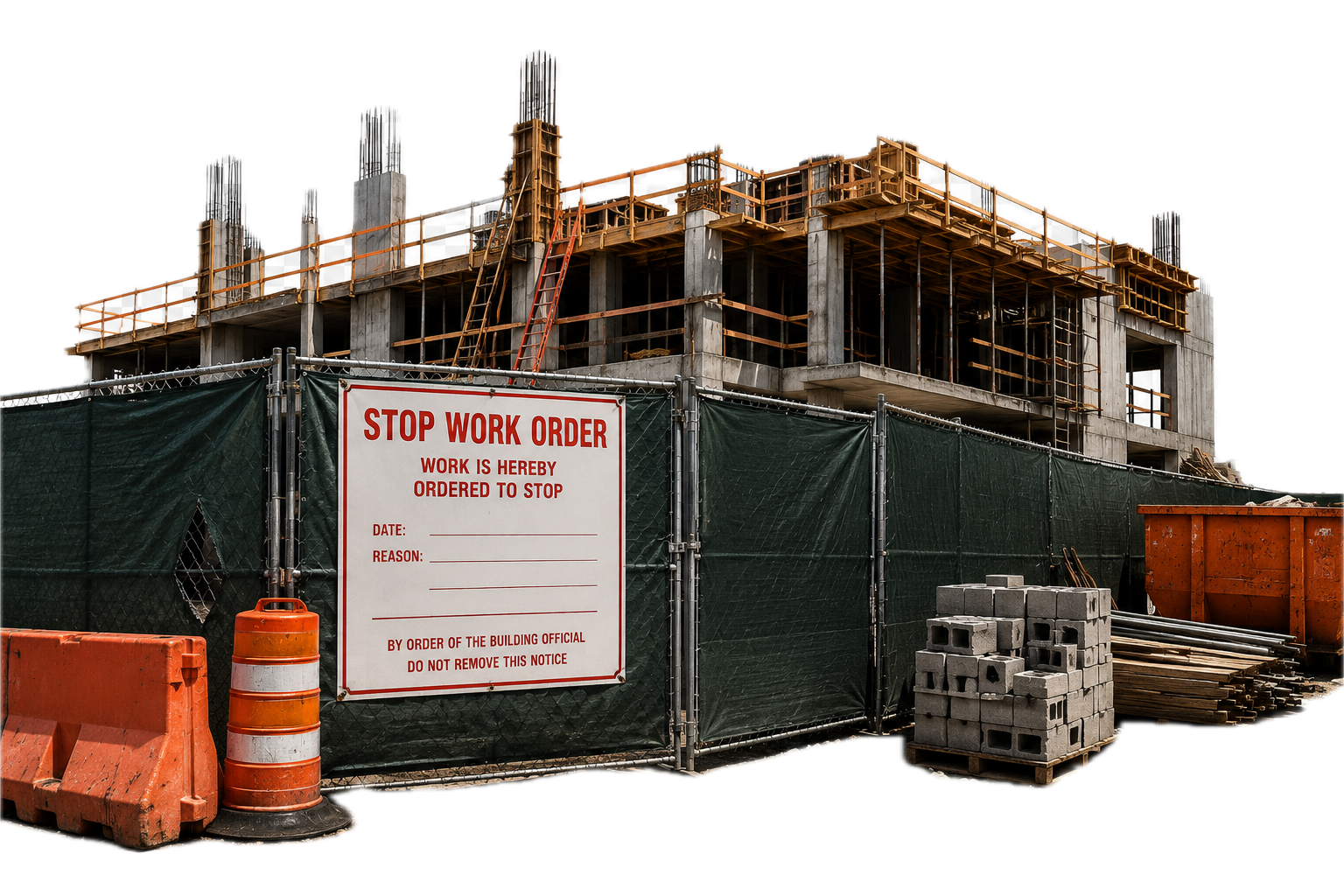
If you've ever tried to sell a house or pull a new permit and been told there's an "open permit" on the property, you already know how much of a headache it can be. In Florida, a building permit isn't truly finished until the local building department performs a final inspection and closes it out. Until that happens, the permit stays open — sometimes for years, often long after the work itself was completed.
This guide walks through what open and expired permits actually are, why they matter, and the exact steps to close them out. If you'd rather hand the whole thing off, [our team handles permit closeout end to end](/contact).
Open vs. expired: what's the difference?
The two terms get used interchangeably, but they describe different problems.
An **open permit** was issued and the work may even be fully done — but the required inspections were never completed and the building department never gave a final sign-off. On paper, the job is unfinished.
An **expired permit** lapsed because too much time passed without an inspection or renewal. Most Florida jurisdictions consider a permit expired after a set period of inactivity (commonly around 180 days with no approved inspection), and the exact rule varies by county and city.
- Open = issued, work possibly done, but never finaled.
- Expired = the permit timed out before completion.
- Both must be resolved before the property is considered code-compliant.

Why an open permit is worth taking seriously
Open and expired permits are rarely urgent — until they suddenly are. They tend to surface at the worst possible moment: during a title search, a mortgage underwriting, or a permit application for new work.
- Title companies and buyers flag open permits during closing.
- Lenders may refuse to fund a purchase or refinance until they're cleared.
- The building department can hold up new permits on the same property.
- In some cases, daily fines or liens can accrue against the property.
Step 1 — Pull the permit history
You can't fix what you can't see. Start by requesting the full permit history for the property from the local building department. Most Florida counties and cities let you search permits online by address or folio number. Look for the permit number, the scope of work, the last recorded inspection, and the current status (open, expired, or finaled).
Step 2 — Renew or re-open if it has expired
If the permit expired, you typically can't just schedule an inspection — you first need to renew it or apply to re-open it. Depending on how old it is, the building department may require updated plans, a new application, or a licensed contractor of record to take over the permit before any inspections can happen.
Step 3 — Pass the outstanding inspections
Once the permit is active again, schedule the inspections that were never completed. For older work that's already closed up inside walls, this is where it gets tricky — an inspector can't approve what they can't see. That may mean opening up a section of wall, providing engineering documentation, or having a licensed professional certify the concealed work.
- Schedule each required inspection in the correct sequence.
- Concealed work may need to be exposed or certified by an engineer.
- Correct any items the inspector rejects, then re-inspect.
Step 4 — Get the final sign-off
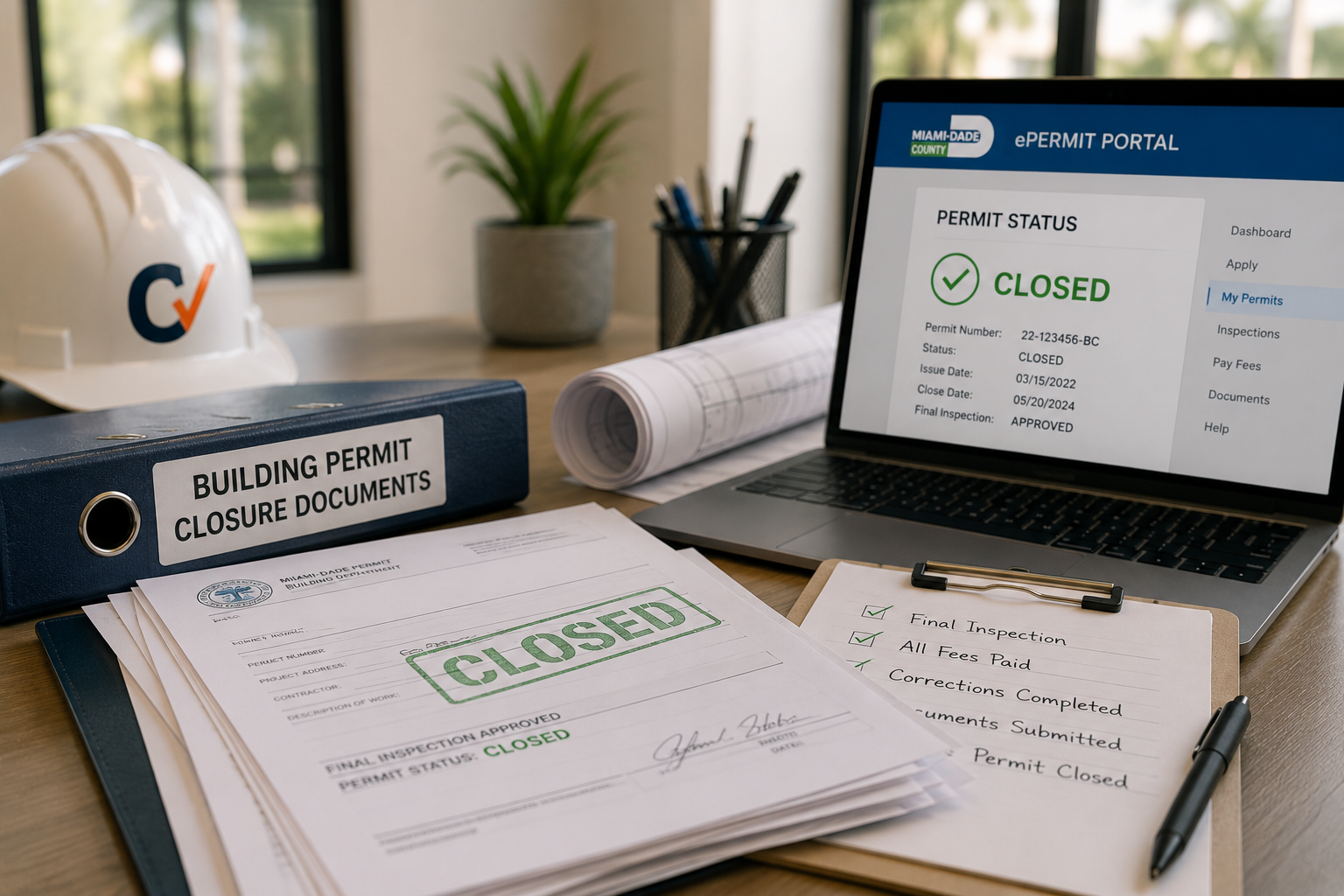
When the last inspection passes, the building department closes the permit and issues a final approval — a Certificate of Completion for most repair/alteration work, or a Certificate of Occupancy for new living space. That document is your proof the permit is officially closed, and it's exactly what a title company or lender will ask for.
Conclusion
Closing an open or expired permit is very doable — it just takes knowing the property's history, working in the right order, and being ready to satisfy an inspector on work that may be years old. The earlier you deal with it, the more options you have and the cheaper it usually is. If you'd like us to pull the history, renew the permit and drive it to a final sign-off for you, [get in touch](/contact).